Tuesday, January 13, 2009

Relief exercise for neck

Exercises that will help you relieve stiffness and strengthen the neck muscles
The neck being the most sensitive muscle involved for people working on the desktop, it is important to stretch the muscles to relieve all the stiffness. However, for permanent pain removal, we need to strengthen the neck muscles. All three exercises are static contraction exercises which help strengthen all neck muscles. All exercises should be repeated at least four times each and should be held for 10-30 seconds. Inhale deeply and hold your breath when you are at the final stage of the exercises.
Exercise 1
Sitting on chair, place one palm on the thigh
Place the other palm against the cheek
Push the head against the palm and resist
Repeat the same on other side
Repeat thrice.

Exercise 2
Close the fingers, cup the chin in your palms
Push chin down and resist with palms
Repeat thrice
Exercise 3
Interlock the hands behind the head
Push the head back while pulling forward with the palms and resist
Repeat thrice.

Why You’re Not Happy!!!

Six common barriers to personal happiness and fulfillment and how to overcome them.
Happiness can be a paradox: The more you reach for it, the more it seems to slip through your fingers.
How could this be true? Could it be you’re looking for happiness in all the wrong places? Do you think happiness is what you get when you get what you want? Some say happiness is a little like falling in love, that you can’t make it happen. If that’s the case, then how can you become happier?
At the 2008 Happiness & Its Causes Conference in San Francisco, a wide range of people -- from scientists, doctors, and psychologists to artists, philosophers, and Tibetan Buddhists -- offered their thoughts on the topic. Here are a few of their tips for overcoming six common barriers to happiness.
Happiness Barrier No. 1: Complexity
Solution: Simplify
Schooled in Buddhist monasteries since childhood, Thupten Jinpa, PhD, knows a thing or two about the benefits of simplicity. Why do you think monks and nuns shave their heads, he asks? For one, it simplifies their lives.
A principal English translator to the Dalai Lama, Jinpa is no longer a monk. But he still holds on to some of the lifestyle's spartan values. “My family has a one-car policy,” he says, pointing out the hassles of owning more than one -- the costs, the maintenance, and the time managing the details. Multiple credit cards? They don’t create freedom or happiness, he argues -- although, these days, he might get less of an argument about that.
Modern life has elevated individual choice to the highest level, he says, but these choices come at a big price. “We often conflate quality of life with standard of life,” Jinpa says, “but after a point, the connection [between the two] disappears.”
If you simplify your life, you create more space in your day, making it possible to reflect on your life.
Happiness Barrier No. 2: A Breakneck Pace
Solution: Take a Pause

The same culture that entangles you in a web of complexity may also have you on the constant chase, Jinpa says. “That kind of tension takes a toll on your soul and your psyche.” Whether you call it meditation, silence, or prayer, taking a “pause” just a few minutes a day can help you “recharge your batteries” and make you feel happier. A good time to do this is in the morning. Without it, your life may feel out of control.
Venerable Robina Courtin, a Buddhist nun and organizer of the Happiness & Its Causes Conference, recommends spending these minutes practicing mindful meditation. “During the day, we’re completely absorbed by our senses,” she says, “so we don’t pay attention to our minds.” Sit in a quiet place and simply anchor your mind on your breathing. When your mind wanders, bring it back to your breath. Through this process, you learn to observe what your mind is saying.
Happiness Barrier No. 3: Negativity
Solution: Let go

“Your prison is nothing in comparison with the inner prison of ordinary people: the prison of attachment, the prison of anger, the prison of depression, the prison of pride.” wrote Lama Zopa Rinpoche to a California prisoner, a student of the Liberation Prison Project, which offers Buddhist teachings to people in prison.
Some might view this statement as a bit of an exaggeration. But negative, compulsive thoughts do have a quality of stickiness to them, Jinpa says. How you see things and the way you experience the world are strongly linked, making it critical to adopt a positive outlook. “You interact with the world through your senses and mind,” he says. “If you can find a way to stand at the doorway of your senses, you can have a say in how you experience the world.”
In our culture, though, we take it as natural that people are angry, depressed, or dejected, Courtin says. “No wonder we get depressed -- it’s a depressing world view. It says you can’t do anything about it.” If you believe your abusive boss, father, or partner is the main cause of your suffering, for example, then you’ve tied your own hands and risk becoming imprisoned by toxic thoughts.
The Buddhist view, by contrast, is that happiness is what you get when you give up a neurotic state of mind, Courtin says. It’s empowering, she says, because knowing you can change it gives you the courage to look inside, pay attention, and take responsibility for your thoughts. Rather than judging negative thoughts, Courtin advises observing them with compassion. Then ask yourself, “What can I do about this?”
Techniques like mindful meditation can help with this, but may not be for everyone, especially those experiencing severe depression, says Philippe R. Goldin, PhD, research associate in the department of psychology at Stanford University.
But there are other simple steps you can take to counteract negativity and enhance your happiness. Practicing gratitude is one. People appear to have a certain set point for happiness, a range that’s influenced by genetics. But those who regularly practice gratitude can enhance this set point by as much as 25%, reports Robert Emmons, PhD in his book, Thanks!: How Practicing Gratitude Can Make You Happier. Through his research, Emmons found that people who kept gratitude journals felt better about their lives, exercised more, and were more optimistic
Happiness Barrier No. 4: Despair
Solution: Stay hopeful

Did a parent attempt to protect you as a child by saying, “Don’t get your hopes up”? There’s no evidence that hope is hurtful, says David B. Feldman, PhD, assistant professor of counseling psychology at Santa Clara University in California. Instead, hope can greatly enhance happiness in people.But genuine hope isn’t a yellow smiley face or the denial of death at the bedside of a loved one in hospice, says Feldman, who’s pursued research and clinical work addressing the question: “How do people maintain hope and meaning in the face of adversity?
Three components are essential for hope to thrive, Feldman says. They are having goals, as well as a plan and the motivation to achieve them. “Those who succeed don’t internalize the blame game, either internally or externally,” he says, “They ask, ‘what now?’”
In addition to reaching goals, these people perform better in sports and school, Feldman says. They have a greater tolerance for pain. They use health-promoting behaviors. They also have a lower risk for depression, anxiety, and heart disease.
Feldman advises setting personally meaningful goals and checking to see where your hope falters -- is it with the plan or the motivation? Allow yourself to daydream, he says. It’s a wonderful source of hope and, therefore, happiness.
Happiness Barrier No. 5: Suppressing sadness
Solution: Feel the real

Having a positive outlook doesn’t mean you never allow yourself to feel sadness. The parents who try to protect their children from dashed hopes -- or any kind of sadness -- may actually produce the opposite effect than is intended, says James R. Doty, MD, director of the Center for Compassion and Altruism Research and Education at Stanford University. Some suffering, he says, makes you a whole person and allows you to acclimate and move forward in your life. Doty speaks from experience. He had an alcoholic father and invalid mother. He lived on public assistance for much of his youth.
“Happiness is not the absence of sadness,” says David Spiegel, MD, medical director of the Center for Integrative Medicine at Stanford University School of Medicine. It is not a stiff upper lip or the pop psychology mantra, intoning “always stay upbeat” in the face of cancer. “Phony happiness is not good.” By suppressing sadness, you suppress other, more positive emotions, as well, he says, so people who try to suppress emotions actually become more anxious and depressed.
By finding outlets for sadness and frustration, you gain some measure of control, Spiegel says. Using others as a sounding board -- not as a toxic dumping ground -- can help convert generalized anxiety and depression into targeted feelings you can address with specific solutions.
Happiness Barrier No. 6: Navel-gazing
Solution: Connect with others

How important are social networks to your happiness? Perhaps even more important than you realized. A recent 20-year study of more than 4,000 people showed that happiness is influenced not just by your immediate friends and family. The happiness of a friend of a friend of a friend -- someone you’ve never even met -- can also influence your happiness. It turns out that happiness can spread through social networks, like a virus.
Unfortunately, many people spend so much time by themselves navel gazing, they don’t benefit from this positive “contagion.”
The more self-absorbed you are, the more your world closes in, and the less realistic you become, all of which produces a vicious circle. “You become oblivious to the needs of others, and the world shrinks still more, making you less able to see outside yourself.” If asked, ‘Why are your problems so special?” says Jinpa, you might respond, “Because they’re mine!”
“If you have such a huge ego, you’re setting yourself up as a huge target, which can easily get hit,” Jinpa says. But using a “wide-angle lens” instead helps you see connections you wouldn’t otherwise see, such as the universality of suffering. All it may take is having a loved one diagnosed with a serious disease to realize how many people are grappling with similar challenges. Feeling joined by others on this journey provides some comfort and happiness.
The straightest path to making connections like these? Compassion and caring for others.
Even primates seem to understand this, says Robert M. Sapolsky, PhD, author of Why Zebras Don’t Get Ulcers and research associate with the Institute of Primate Research at the National Museum of Kenya. Primates that groom each other after a stressful event experience a reduction in blood pressure. The clincher? Grooming others has a greater impact than getting groomed, says Sapolsky.
Compassion engages us with others, removes isolation, builds resilience, and leads to deep fulfillment, says Doty.
“Without compassion, happiness is simply short-lived pleasure.”
Tenzin Gyatso, the 14th Dalai Lama, may have said it best:
“If you want others to be happy, practice compassion; if you want to be happy, practice compassion.”

Friday, January 2, 2009

High Blood Sugar Linked to Memory Loss

Taking Steps to Lower Blood Sugar May Protect Against Age-Related Memory Loss
Maintaining normal blood sugar levels as we age may protect against more than diabetes. It may also help prevent age-related memory loss, a new study shows.
Using high-resolution brain imaging, researchers showed that rising blood sugar levels selectively target a key area of the brain linked to memory decline.
The finding suggests that interventions to improve blood sugar, such as getting regular
exercise and eating a healthy diet, may help both the body and the brain as it ages.
"We have known that exercise improves blood sugar and that it helps prevent age-related memory loss," says lead researcher Scott Small, MD, of Columbia University Medical Center. "In this study, we were able to show the specific area of the brain that is impacted by rising blood sugar."
Blood Sugar and Memory
Focusing on the hippocampus -- the area of the brain associated with memory and learning -- Small and colleagues previously identified a section that was most associated with age-related memory decline.
In their newly published study, the researchers looked at how this area, known as the dentate gyrus, is affected by changes typically seen with aging, such as rising
cholesterol, body weight, and blood sugar.
Human and animal imaging studies confirmed that rising blood sugar was the only change directly associated with decreased activity in the dentate gyrus.
Because blood sugar levels tend to rise with age, the finding suggests that monitoring and taking steps to lower blood sugar as we grow older may be an important strategy for preventing age-related cognitive decline for everyone, not just people with diabetes, Small tells us.
The study was funded by the National Institute on Aging, the American Diabetes Association, and the McKnight Brain Research Foundation. It appears in the December issue of the journal Annals of Neurology.
"Beyond the obvious conclusion that preventing late-life disease would benefit the aging hippocampus, our findings suggest that maintaining blood sugar levels, even in the absence of diabetes, could help maintain aspects of cognitive health," Small says in a news release.
Exercise Lowers Blood Sugar
Because exercise improves the ability of the muscles to process glucose, it makes sense that it helps protect cognitive function as we age, Small says.
Linda Nichol, PhD, of the National Institute on Aging, tells WebMD that the research may help explain why diabetic people are at increased risk of developing
Alzheimer's disease.
She says studies are under way to determine if
drugs that regulate blood sugar can help slow cognitive declines in people with early evidence of the disease.
It is far too soon to say if people who don't have diabetes might benefit from taking the drugs as they get older, she says.
"We already know that physical exercise can help people stay cognitively sharp as they age," she adds. "This study may help explain why."

Monday, December 29, 2008

Depression: Offering Support

Trying to offer support to a friend or loved one with depression can be hard. You may not know how to act. You may worry that you'll say the wrong thing. Here are some suggestions about how to offer positive support.
Don't ask your loved one to snap out of it.
Depression is a real illness. People who are depressed can't just "pull themselves together" and feel better. Recovering from depression takes time and treatment. Think about it: You wouldn't ask someone with cancer to snap out of it. Depression is just as real and just as serious an illness.
Listen. Right now, what your loved one with depression may need most is someone to listen. Don't dismiss his or her concerns. Don't assume that you know what he or she is going through. Just listen.
Encourage your depressed loved one to be more active. Most people who are depressed isolate themselves. Isolation can make things worse. So gently encourage your friend with depression to get out more. Suggest that you do things together. Invite your loved one out to dinner or to a walk around the neighborhood.
Don't push too hard. Be encouraging but not forceful. Don't make demands. People who are depressed feel overwhelmed as it is. If you're always pushing, a person with depression may pull back more. So if your friend or loved one declines your invitations, don't force the issue. Instead, just give it a little time and then ask again. Be persistent but gentle.
Encourage your loved one to stick with treatment. It's key that your loved one with depression stay on his or her medication and get regular checkups. He or she may also need encouragement to eat well, get enough sleep, and stay away from alcohol and drugs. You could also offer to go with your loved one to therapy or health care appointments.
Create a stable environment. Reducing stress around the home can help a person with depression. Try to get your loved one on a schedule, so he or she knows what to expect each day.
Emphasize that your loved one will feel better. Because of depression, your loved one may feel hopeless. Be reassuring. Depression distorts a person's perception of the world. But with time and treatment, your friend or loved one will see clearly again.

Wednesday, December 10, 2008

Embarrassing Conditions

Managing embarrassing symptoms -- burping, intestinal gas, and the growling stomach --- may be as simple as changing your diet
It's happened to everyone at least once. In an awkward silence on a date, or during your fifth grade clarinet solo, or in the middle of a business presentation, your body suddenly betrays you. You burp. Or your stomach begins to growl and roar. Or worst of all, you have -- to put it delicately -- an outburst of intestinal gas.
But what causes these noisy, embarrassing, and sometimes foul-smelling eruptions? And is there a way to prevent them?
How Common Is Gas?
Gas is a great leveler. From the pauper to the king, from the slovenly frat boy to the prim grandmother, everyone has intestinal gas.
"We've all got gas, whether we admit it or not," says C. Mel Wilcox, MD, professor of medicine at the University of Alabama at Birmingham and spokesman for the American Gastroenterological Association. "But because everyone is different, some people have more than others." According to the National Institutes of Health, the average person passes intestinal gas 14 times a day and produces about 1 to 4 pints of the stuff.
That may be more than you expect. Many people who believe that they are excessively gassy actually have perfectly ordinary amounts, says Steven Edmundowicz, MD, chief of endoscopy at Washington University School of Medicine in St. Louis. However, it may be that it's just more distressing -- both emotionally and physically -- to some people than it is to others.
So where does gas come from? There are two major sources: some comes from air that you swallow and the rest is a by-product of digestion.
Eating the Air
For the most part, burping is caused by air that you swallow. Aside from teenage boys engaging in belching contests, most of us don't swallow air on purpose. But eating air is easier to do than you might think. You can increase the chances of swallowing air by:
Smoking
Chewing gum
Drinking through a straw
Sucking on hard candies
Drinking a lot of carbonated beverages
Eating or drinking too quickly
Wearing loose dentures
In addition, any medical condition that might cause you to swallow frequently can increase the amount of air you get into your stomach. For instance, allergies or sinus infections that cause postnasal drip can make you swallow more often. That may increase the amount of gas in your system.
Edmundowicz tells us that people with severe heartburn are also likely to swallow air. The natural reaction to the backwash of stomach acid into the esophagus is to swallow in order to force the acid back down. The more you swallow, the more air gets into your stomach.
Some people develop an unconscious nervous habit of swallowing. "There are a lot of closet air swallowers out there who don't realize that they're doing it," says Wilcox.
Bacterial Fermentation
Some of the air that you swallow goes through the intestinal tract and out the other end. But the major source of intestinal gas derives from the action of harmless, naturally occurring bacteria in your intestine.
Gas is a by-product of bacterial breakdown of undigested food that makes its way to the large intestine. Most of the gas is hydrogen, oxygen, nitrogen, carbon dioxide, and, in about one-third of people, methane. The signature stink of intestinal gas comes from sulfur.
The volume of intestinal gas is directly related to the amount of undigested food that goes into the large intestine. If you're eating things that can't be absorbed by the small intestine, or if your small intestine can't absorb certain foods normally, the bacteria in the large intestine will pick up the slack and manufacture more gas in the process.
The Growling Stomach
Intestinal gas can also cause the familiar sounds of the "growling stomach," a term that's actually a misnomer, says Munsey Wheby, MD, president of the American College of Physicians.
"It's not usually the stomach making the noise," says Wheby, who is also senior associate dean and a professor of medicine at the University of Virginia School of Medicine. "Instead, it's caused by the intestines as they contract."
Everyone knows that a growling "stomach" can mean that you're hungry. But the noise often stems from the movement of air through the intestines, whether there's food there or not. So if you've been swallowing a lot of air, or if you've been eating things that your small intestine can't digest, you may hear some grumbling, or even a whole symphony of bizarre and embarrassing noises.
But like burping and flatulence, occasional growling from the intestines isn't anything to worry about, says Edmundowicz.
What Foods Cause Gas?
Obviously, some foods cause more gas than others. As any schoolboy will tell you, the most notorious offender is baked beans, but there are plenty of others, including grains (for instance, the word pumpernickel is believed to stem from Middle German and mean, roughly, "goblin that breaks wind").
Any food that is high in soluble fiber, for instance, is only broken down by bacteria in the large intestine, so that can mean more gas. Foods that may cause gas include:
Vegetables such as cauliflower, broccoli, cabbage, brussels sprouts, onions, artichokes, and asparagus
Beans
Fruits such as apples, pears, and peaches
Whole grains, such as whole wheat and bran
Sodas and fruit drinks
Foods with sorbitol, often used as a sweetener in sugar-free gums and candies
As you may have noticed, many of those foods are the bedrock of healthy diets.
"People sometimes do get confused when they find out that a healthy high-fiber diet with lots of fruits and vegetables can cause excess gas symptoms," says Edmundowicz.
Fruits, vegetables, and grains are important for digestion in other ways, so if you have gas, be cautious when trying to eliminate healthy foods from your diet. You may just need to eat a little less to ease your symptoms.
Cutting Out the Cheese
Some people may have extra gas because they can't digest certain foods normally. For instance, people who are lactose intolerant are missing the enzyme that processes lactose, the main sugar in dairy products. Because they can't digest it in the small intestine, the bacteria get a hold of the lactose in the large intestine, creating gas.
Although lactose intolerance is a common condition, especially among people of African, Native American, or Asian descent, you shouldn't immediately decide to cut out dairy products if you have excess gas.
"In my opinion, lactose intolerance certainly exists," says Wilcox. "But I think it's rarer than people think as a cause of symptoms."
Wilcox has seen many patients who have heard about lactose intolerance and diagnosed themselves. But even after eliminating dairy products, their symptoms linger. Cutting out dairy without good reason can lead to other problems in the long run, such as osteoporosis from the loss of calcium in the diet.
So if you're having excess gas, you shouldn't abruptly cut all dairy from your diet. Instead, see your doctor and talk about it. He or she might order some tests to find out. Edmundowicz also suggests that you try a more measured approach to zero-in on the particular foods that might be giving you trouble -- such as eliminating one food at a time and re-evaluating your symptoms.
Disagreeable Food
Although lactose intolerance may be the best known, there are other types of known food intolerances. For instance, fructose intolerance is an inability to digest a different sugar that's in some vegetables and fruits and also used as an artificial sweetener.
But the individual reactions that people have to various foods are so diverse that they can't be categorized. For instance, one person may notice that peppers give her terrible intestinal gas, while another can't eat onions for the same reason.
Some of your digestive symptoms -- such as flatulence, bloating, and cramping -- may depend on what particular strains of bacteria have or have not set up shop in your large intestine. But that's probably not the whole story.
"We just don't have scientific and physiological explanations for some of these reactions," says Wheby.
Wilcox agrees. "
It all just depends on your make-up and what you eat," he says, "and you learn what to avoid by trial and error."
How Can I Reduce my Gas?
Ultimately, there's only so much one can do to reduce the amount of gas you have. Everyone has to contend with some belching and intestinal gas every day.
But if it's really bothering you, or if you feel that the amount of gas you're producing is excessive, there are some steps you can take. All three experts agree that the most important steps are making changes to your diet by:
Avoiding anything that might increase your chances of swallowing air, such as smoking, drinking through straws, and eating too quickly
Avoiding or cutting down on problematic foods, such as carbonated drinks, beans, and some raw vegetables
Considering a food diary. If you can't figure out what may be causing your increased gas, try keeping a journal of what you eat. You may find one or two foods that seem to increase your symptoms
There are countless products sold in drugstores that may give you some relief, including antacids and digestive aids. But Wilcox and Edmundowicz caution that they may not help much.
"Antacids have very limited effects," says Edmundowicz. While simethicone, an ingredient in many antacids, seems to help some people with heartburn, it won't help with intestinal gas.
For people who are intolerant to lactose or the sugar in beans, enzymes are sold in over-the-counter products such as Lactaid and Beano, respectively, to help with digestion. However, their effectiveness varies from person to person, say Edmundowicz and Wilcox.
On the whole, Edmundowicz suggests that people use whatever over-the-counter or home remedies that help. "Because these symptoms aren't medically significant most of the time, we encourage people to use any safe remedy that works," he says.
When Should I See a Doctor?
Most of the time, gas symptoms aren't anything to worry about, but getting checked out is always a good idea. You should definitely see a doctor if:
You notice new symptoms
Your symptoms keep getting worse
Your symptoms are associated with pain, vomiting, or weight loss
Certain conditions, such as Crohn's disease or tumors, can cause blockage in the intestines and increase gas symptoms.
However, if you've always had gas and you're not having more serious symptoms as well, you probably don't have to worry, say Wilcox and Edmundowicz.
"People come in with complaints about gas and want to be diagnosed with something," says Wilcox. "I think that's how Americans tend to be. But for a lot of these symptoms, we just don't have an answer. It just depends on the individual."
So for most of us, coping with gas -- while noisy, embarrassing, and sometimes malodorous -- is just a normal part of life.

Wednesday, December 3, 2008

Change Your Breath From Bad to Good

Bad breath is embarrassing, unpleasant, and all too common. These eight easy tips will sweeten your breath for good.
Don't let your tongue become a dirty carpet.
Bad breath often strikes when people aren't properly taking care of their
oral health. The odor is usually caused by decaying food particles and bacteria in your mouth. That's why brushing and flossing your teeth is so important, but don't forget to gently brush your tongue to get rid of even more bacteria.
A clean tongue goes a long way to warding off bad breath, says Stephen Z. Wolner, a dentist in private practice in New York City. "Your tongue microscopically is like a shaggy carpet. There are millions of filaments on your tongue that trap tiny food particles and bacteria," he says. Get in the habit of regularly cleaning your tongue using a toothbrush, the edge of a spoon, or a tongue cleaner. If you have any mouth guards or oral devices, make sure to clean them thoroughly before putting them back in your mouth.
Mouthwash isn't a bad idea, but it's only a temporary fix. Granted, a little mouthwash comes in handy before a romantic dinner for two, but it masks the odor instead of tackling the source of your problem.
Chew gum like it's going out of style.
Believe it or not, saliva is your best weapon against bad breath. That's why dry mouth, often caused by certain
medications or medical conditions, leads to odor problems. By washing away food particles and bacteria, saliva helps to eliminate odor, too.
If you're wondering why your breath stinks in the morning, it's largely because saliva production slows while you
sleep, allowing particles and odor to linger longer. That's where sugarless gum comes in handy, as chewing it will stimulate saliva production. Mints, on the other hand, don't usually stimulate saliva production and only temporarily mask bad odor.
"When you chew gum it makes you salivate, and the more saliva you have in your mouth the fewer bacteria you have. It not only mechanically washes bacteria out, but we have antiseptic and enzymes in our saliva that kill bacteria," says Wolner.
While anything that makes you salivate will improve your breath, a gum that is sweetened with xylitol is your best option. Xylitol is a sugar substitute that not only increases salvation but also works to prevent bacteria from replicating in the mouth.
Choose cinnamon -- it's sweeter.
A recent study of the cinnamon-flavored gum Big Red found that cinnamon might have breath-odor fighting abilities. Unlike other flavors, cinnamon is not just a cover-up, Wolner tells us. In fact, he says, an ingredient in the flavoring appears to actually decrease the bacteria in your mouth. The only problem is that sugar gums are bad for your teeth, so stick to sugarless cinnamon-flavored gum instead.
Drink more water.
Wolner says the older you get the more likely you are to get dehydrated. You might not even notice you're thirsty, he says, so make drinking water a habit, because water will help keep the bacteria in your mouth to a minimum. Drinking water has a lot of health benefits, and preventing bad breath is one of them.
Rule out rare causes for bad breath.
While most bad breath can be banished with simple hygienic steps, there are times when dental or medical conditions might be the culprit. Make an appointment with your dentist if an unsavory odor takes residence in your mouth.
"If there is a persistent odor in your mouth, and you know it's not from the pasta you ate last night, see a dentist," Wolner tells us. Your dentist will be able to pinpoint any cavities or decay, or even periodontal (gum) disease, that might be causing your bad breath.
Because on rare occasions bad breath can signal a larger problem, including infection, and even kidney or
liver failure, you should also visit a doctor if your dentist doesn't find a cause for your bad breath problem.

Have a slice of bread.
If you're on one of the many popular low-carb diets, remember that bad breath or "ketone breath" is a potential side effect when you always have that burger sans bun. You can try different methods of masking the odor, such as gum or tart candies, but adding a few carbs to your daily diet might also do the trick.
Get a water pick.
You can't really clean your entire mouth with a toothbrush. "Using an irrigator or water pick cleans everything out around and under your gums and between your teeth," says Wolner. "If food lingers between your teeth where a toothbrush doesn't reach, it's fermenting." Next time you floss, take a whiff of your floss after you're done, and you'll have a good idea about what fermented or rotten food particles smell like.
Don't let bad breath go to your head.
If you think you have bad breath, get a second opinion. "A large proportion of people who think they're social pariahs with terrible breath don't have bad breath at all," says Wolner

Tuesday, November 25, 2008

Exercise: as treatment to manage Blood Pressure

Many studies involving different age groups and differing exercise have shown that regular physical activity lowers blood pressure for those who have hypertension. A review of over 20 physical activity and blood pressure studies showed that, systolic blood pressure is lowered about 11 mm Hg and diastolic blood pressure is reduced an average of 8 mm Hg with regular exercise. Those effects have been documented for men, women, and children and can occur after just a few weeks of training.
Lowering blood pressure 8 to 11 mm Hg is similar to the changes found after treatment with a typical blood pressure-lowering medication. Reducing blood pressure to this degree can reduce
stroke and heart attack rates by 25 percent! So, exercise can be the difference between being placed on drugs, with all their possible side effects and cost, and not needing any other treatment. For others, exercise can eliminate the need for one or more blood pressure control, exercise helps you feel better, decreases other risks for heart and blood vessel disease, lowers body fat, and improves your fitness level. On the other hand, blood pressure medicines do none of those. And remember, the best they can do is not make you feel worse.

1. Kinds of Exercise That Lower Blood Pressure
Nearly all exercises lower blood pressure. Endurance exercise such as walking,
jogging, swimming. stair climbing, and bike riding can help control blood pressure. Even weight lifting can be used to treat hyper-tension. Practically any physical exercise you can think of can be used to lower your blood pressure. However, to be effective and to improve your chance of success, you should select exercises you enjoy and that are convenient.

2. How Exercises Lower Blood Pressure
Exercise appears to reduce blood pressure in several different ways.
First, just taking off fat through physical activity will lower blood pressure; this is similar to
reducing body fat by dieting. But exercise has several advantages over just dieting. Breathing more rapidly, even with low levels of exercise, and sweating during physical activity help you get rid of water and salt, as would using a diuretic to lower blood pressure.

Also, exercise affects two major
hormones in our body. With training, the resting level of adrenaline is reduced. This lowers your heart rate and blood pressure, just as if you used a beta blocker, but with several major differences. Using beta blockers causes you to become less fit (they typically reduce aerobic fitness by 10 percent), but exercise makes you more fit. Instead of feeling more fatigued and losing sleep, you have more energy and sleep much better. And importantly, the blood cholesterol and sugar abnormalities that can occur with beta blocker use do not occur, and your cholesterol levels and blood sugar handling improved with exercise.
Another hormone, insulin, which is made in our pancreas, circulates in our bloodstream and helps control sugar levels. Some of a condition referred to as
insulin resistance. Their body needs to produce more insulin to control sugar. Although this condition most commonly occurs when we have too much body fat, it can occur for no apparent reason. These higher than usual insulin levels will increase our body's salt stores by making our kidneys hold on to sodium. This results in higher blood pressure. Regular exercise reduces insulin levels, and this effect alone may reduce blood pressure.

3. How Long Should I Exercise?
Start with just 20 minutes. You can split your physical activity into two 10 minute periods, if it is more convenient. Then add 2 minutes to each exercise day, every week, to reach a minimum of 30 minutes, three times each week.

Initial Formula for Exercise
Type of exercise
Aerobics or weight lifting
Intensity (how hard) 65 to75 percent of maximal heart rate, or perceived exertion
level of 2 to 3 out of 10 for aerobics.
Duration (how long) 20 minutes, increasing to 30 minutes
Frequency At least three times each week

However, just as some people require a large dose of medicine to control their blood pressure, you may require larger dose of exercise. We suggest , you can do this by increasing the number of exercise days.

4. Choosing
an Exercise
Select activities you like to do and that fit into the time constraints of your life. Don't worry about your skill level or how you will look. For example, if you select swimming,
constant activity for 20 minutes is sufficient for the first two weeks. It doesn't matter how far you go or how well you can swim (if you are not a strong swimmer, make sure you can stand in the pool with your head out of the water). If you choose to ride a bike, try an exercycle (a stationary cycle). It is usually easier to use in the beginning, and unless you are climbing hills, your workout will be more efficient and probably more vigorous. With stationary bikes there is no starting and stopping at corners; you can't fall off, become lost, or get a flat tire.

You only need to exercise at 65 to 75 percent of your maximum heart rate to lower blood pressure. If you are using a medicine that rate to lower blood pressure. If you are using a medicine that has changed your heart rate, you can use the convenient perceived exertion scale. On a scale of 0 to 10, where 0 represents the amount of exercise you should exert yourself at a level of 2 to3. By rating your own level of exertion, you don't have to rely on heart rates, which can be different from person to person and be altered by taking certain medications.

5. Exercise guidelines while taking Blood-Pressure Lowering Drug
When you exercise , while taking blood pressure - lowing drugs, it is often best to use the perceived exertion scale and rely less on heart rate formulas.
Using your heart rate as a guide is not very helpful when you take medications such as beta blockers, certain central alpha agonists (like clonidine), or calcium channel blockers. Beta blockers reduce endurance exercise capacity by lowering the heart rate, and through other effects. This characteristic is great for women with both
coronary artery disease and high blood pressure because it allows exercise with reduced pain symptoms and lower blood pressure, resulting in less stress on the heart.
There are some specific recommendations for certain blood pressure drugs.
If you use diuretics, it is important that you receive enough
potassium and magnesium to replace losses due to the drug and exercise.
Some vasodilator drugs can increase heart rates.
Because of the possible drug effects on heart rate, and the possibility of miscalculation when you determine your training heart rate, using the perceived exertion scale is a better way to go.
"Always check with your health care provider before you exercise, especially when you are taking medications, no matter what they are."

Why Men's Lives Are Shorter Than Women's

Listen up, guys. It may be time to drop the bravado and consider these sobering statistics:
· Coronary artery disease (CAD) is three times higher among men who are clinically depressed.
· Male suicides outnumber female suicides in every age group.
· Homicide and suicide are among the top three causes for death among males between the ages of 15 and 34.
· By the age of 85, women outnumber men in the U.S. 2.2 to 1; this rises to 3 to 1 if they reach their 90s.
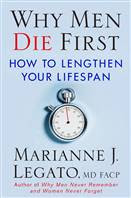
These are just a few of the realities examined in Why Men Die First: How to Lengthen Your Lifespan, a new book by Marianne J. Legato, that focuses on the biological, cultural, and personal reasons that men's life span in the U.S. lasts an average of six years less than women's.
Male mortality is shorter in part, Legato says, because males are more fragile and inherently vulnerable than females from birth. And unlike women, who have fought hard to have their specific health needs validated and addressed, men haven't demanded equal treatment.
"It is a need that has never been addressed," Legato says. "Men have been tremendously neglected and it doesn't have to be that way."
Men's medical challenges owe a great deal to cultural conditioning. The rules are set shortly after birth, Legato says: Suck up the pain, don't be a wimp, show no weakness, and "man up." Many men only seek medical counsel when under duress from a spouse or when their condition has deteriorated to a severe state."Women are able to logically ask for help," says Legato, who has long promoted the concept of gender-specific medicine. "They're hardwired in the brain and very motivated." "The cultural reasons for not going to the doctor are killing men," she says.

How Men Can Live Longer
In her book, Legato examines and champions an end to the lack of awareness among men -- and even the medical community -- regarding the specific health needs of a male that could help prevent male deaths. Men, she says, deserve better and should insist on higher standards.

"Don't tolerate the current situation where men die six years before women," Legato says. "If we can conquer breast cancer and AIDS to the extent we have, we can certainly save our men."Legato highlights the following leading factors of death in men in which men can begin to make a significant difference in their health and improve male life expectancy:
1.Speak frankly with a doctor: Leave embarrassment in the waiting room. Women are taught at an early age to be candid and open with their doctors. Symptoms that can be uncomfortable to talk about -- such as erectile dysfunction -- can be tied to more serious ailments such as diabetes and heart disease. Men, despite cultural tradition, should also request breast checks It's a part of the body and should be examined," Legato says. She encourages men to perform testicular self-exams in the way women are taught to check their breasts for irregularities. Although men may cringe at getting a prostate check, they are far less uncomfortable than experiencing the pain of cancer treatment.
2. Check testosterone levels: Beginning at age 30, testosterone begins to dip by 1% each year, says Legato. Lowered testosterone levels can lead to a decrease in vitality, muscle mass, ability to perform prolonged exercise, memory, concentration, and libido. Not only does this impair quality of life, it can contribute to depression, which can have a significant effect on male health, potentially increasing the risk of coronary disease. There are several treatments available -- including gels, patches, and injections -- that can help restore this vital hormone to proper levels.
Robert Ruxin, an endocrinologist from Ridgefield, Conn., says normal testosterone loss has little correlative effect on vitality or sexuality. But there are instances when dramatic loss -- more likely between the ages between of 60 and 80 -- can impede quality of life.
"When it drops normally, probably not, but very low, yes," Ruxin says. "A level that drops from 800 to 500 has not been shown to have a clinical effect. Maybe from 800 to 400 can be too low."
Diabetes patients, for example, may have a greater risk of significant testosterone loss. Conversely, pituitary hormones, he says, can balance out the effects of the difference in individuals who are losing testosterone at a typical rate.
"There's a wide variation of normal."
3. Immune systems: The male immune system is not as vigorous as those of females, and men die from seven of the 10 most common infections at a higher rate, Legato says, particularly tuberculosis and sexually transmitted diseases. Sanitary sexual practices are essential, beginning with use of a condom. Men should check for updated vaccinations with their doctor when traveling to foreign countries. A tetanus shot should be administered every 10 years.
"Immunization is not finished after the second year of life," Legato says.
Proper nutrition and supplementation can also be beneficial. Despite the gender-focused attention it receives, osteoporosis also strikes men.
4.Recognize and treat depression: Male depression may be much more common than has been previously estimated. Symptoms aren't always obvious.
"We glibly state that women are twice as often depressed as men throughout the world," she says. "What they do is turn to behaviors that are semi-socially acceptable: drinking alcohol, TV watching, greater sexual exploits."

Legato is convinced the vulnerability of depression can compromise men's health in other ways, leading to increased instance of disease and greater male mortality from such conditions. It's also a common symptom of "andropause," which is marked by a decrease of testosterone in males that is similar, if less dramatic, than the effect of menopause in females. Indeed, males are also susceptible to the notorious hot flashes that have often marked the change of life for women, albeit years later.
Legato says the current medical system often prevents doctors from obtaining a proper understanding of a patient's personality and life structure. Make time to discuss any such issues with a doctor and be open to treatment. "A pill is not always the cure," Legato says. "Structured conversations can be very helpful."
While Ruxin is not convinced that andropause is a genuine male concern, others are in sync with Legato's insights on male depression.James Korman, PsyD, ACT, director of the Behavioral Health and Cognitive Therapy Center at Summit Medical Group in New Jersey, agrees that depression in men occurs far more often than reported. He also points to cultural factors as often influencing men's reluctance to get treatment.
"Men tend to express depression differently than women," Korman says. "This can result in sleep disturbances, mood change, and sexual disinterest."
Left untreated, depression can have catastrophic results.
Regarding suicide, Korman says that while women typically make more attempts, "men are much better at completing it."
Men need to realize, Legato says, how destructive depression can be to their health and openly discuss their concerns with a doctor.
"To enjoy the day and be as viable as possible in the present is the best attitude," she says.
5. Keep a close eye on young males: The reckless nature and lifestyle of adolescents make them prime targets for injury or death. Females develop a more evolved sense of judgment and decision making at an earlier age then males. Add to that the cocktail of testosterone and other hormones and, biologically, males possess a potentially lethal internal recipe. Monitoring their activities and setting careful limits is vital. "Boys have been compared to a Porsche without brakes," Legato says. "They take risks, are idealistic, intense, and believe they're invulnerable."
6. Assess your risk for coronary disease: Coronary disease, Legato says, "takes a toll on men in their prime and leaves families bereft." It's imperative to sit down and assess the risks along with any predisposed genetic tendency and discuss these with a doctor. Have any relatives died of heart disease before the age of 60? What are your cholesterol levels? Have you experienced fainting episodes, loss of consciousness, or shortness of breath?
"We downplay this tremendously," Legato says.

Again, men aren't genetically blessed compared to women in this area. The female hormone estrogen provides women with a layer of protection that men don't naturally possess, asserts Legato. Further illustrating this: Men can begin developing signs of coronary artery disease at the age of 35, Legato says, while women don't present a risk of a heart attack similar to men until much later. Men with a family history of heart disease should alert their doctor and take proper precautions beginning in their 30s.
"It doesn't have to be that way," Legato says. "We should be turning a very critical eye on why coronary disease starts in the mid-30s."

Monday, November 24, 2008

Cosmetics Ingredients Linked to Breast Cancer?

Even at the youngest ages, little girls find their way into their mother’s makeup kit, making a mess of lipstick, eye shadow and mascara on their face. And as girls grow older, they begin the delicate debate with their parents over what type of makeup they can wear and when. However, mothers and fathers everywhere may have one more tool in their arsenal for convincing their daughters to delay that trip to the cosmetics counter.
A new study suggests that women who begin using makeup at an earlier age and in greater amounts may have an increased risk of developing breast cancer later in life.
“There is growing evidence that we should be particularly concerned about the use of makeup by teenagers and children,” says Dr. Janet Gray, professor at Vassar College and creator of a new CD that outlines the evidence linking certain products and materials to breast cancer risk.
Don’t worry, you don’t have to toss out your entire makeup bag, says Gray. The results of her compilation of previous research indicate a strong association between some common ingredients in cosmetics, but not all. So, a smart cosmetics consumer can try to make smarter choices when it comes to picking out particular products.
The worst offenders, it seems, are shampoos and other hair care products marketed to the African American community. Many of these products have placenta extracts inside, which contain adult hormones, like estrogen. And for many years, estrogens have been known to increase breast cancer risk. Manufacturers claim that these placenta extracts are used in shampoos to help strengthen hair and reduce breakage. “You can go to any drug store and find shampoos that advertise placenta extracts,” said Gray.
These estrogen-laden products, when used in high amounts by young girls may also cause early puberty, which is a separate factor that can influence breast cancer risk.
But even avoiding these particular hair care products may not be enough. Besides estrogens, there are two chemicals commonly found in many personal care products that may also be putting you at risk—and they aren’t always clearly labeled.
Parabens are a group of chemicals used as a preservative in many personal-care products, such as lotions, shampoo, sunscreen, skin foundation and bath gels. They are used to prevent the growth of bacteria and other organisms in the bottle, but they also acts like a weak estrogen. In some studies, exposure to environmental estrogens, like parabens, has been linked to a higher risk of breast cancer.
The other indicated chemical group, phthalates, can be found in nail and hair products, including gels, mousses and hair sprays, as well as skin creams and lotions. These chemicals are used to help the skin absorb the product, but they have been linked to certain birth defects and cancer. Like parabens, they also seem to disrupt the natural hormones in the body, which in turn, may increase the risk of breast cancer.
Estrogens, phthaltates and parabens may collect in the tissue over time and slowly alter healthy cells. Gray suggests that this is why teens and adolescents may be the most susceptible to their ill effects as, over years of use, there may be cumulative damage.
“Adolescence is the time when breasts are developing, so this is clearly a time when exposure matters for developing breast cancer 20 to 30 years later,” says Gray.
Fortunately, some companies have begun making strides in removing these chemicals from their products. OPI, Orly and Sally Hansen, for example, have removed phthalates from all of their nail products. And other major cosmetics companies are following their lead.
“Reformulating to remove dangerous chemicals is so much better than arguing about how much of these chemicals is OK to use in nail polishes,” said Jeanne Rizzo, a registered nurse and executive director of the San Francisco-based Breast Cancer Fund.
Gray suggests doing a little homework to figure out which products are safest to use. Some websites, such as www.safecosmetics.org, list those companies who have promised to remove these chemicals from their products. Also, try to use less makeup and lotion to reduce exposure and perhaps lower the amount of chemicals that will collect in your body overt time.
“Each time you put on lipstick isn’t going to cause cancer,” says Gray. “But it’s the additive effect of years of lipstick, lotion and other environmental risks.”
Also, educate teens and children about why wearing too much makeup or using too many hair care products may be harmful to them.
“Makeup is a part of our culture,” says Gray. “But if you are going to use it, realize that you are putting chemicals on your body.”

Big Purses Can Be a Big Pain

Jumbo-size purses are all the rage, but they're also a pain in the neck—and elsewhere.
These hefty handbags can cause back pain, shoulder pain, neck pain, headaches and maybe even arthritis, warns Dr. Jane Sadler of Baylor Medical Center in Garland, Texas.
"I see so many women with neck pains and headaches and what I usually do is look for their purse and pick it up. We take it over to the scale and weigh it and usually they're anywhere from 7 to 10 pounds," she stated in a news release issued by Baylor Health Care System.
Like those bulky backpacks hauled around by schoolkids, this fashion fad turns out to be just another case of poor posture and ergonomics. "It creates strain along the neck and into the nerves that exit the neck and down the shoulder so it can be very painful later on for many women," Sadler noted.
Suggested ways of pruning your purse include carrying only the money and credit cards you need, clipping your cell phone to your belt and leaving those oversized makeup kits at home.
"We're really going to see women with more and more problems later on if we continue the big purse craze," Sadler cautioned.